
Get inspired...
Samburu, Kenya: culture and the "Special Five"
Updated: 10 November 2025 - Author:
Samburu, a county in Kenya's arid north, sits between Mount Kenya and Lake Turkana, spanning the Great Rift Valley and stretching along the Ewaso Ng'iro River. It's home to the Samburu people, semi-nomadic pastoralists closely related to the Maasai, and to a cluster of reserves and conservancies known for wildlife found almost nowhere else in Kenya.

Samburu culture
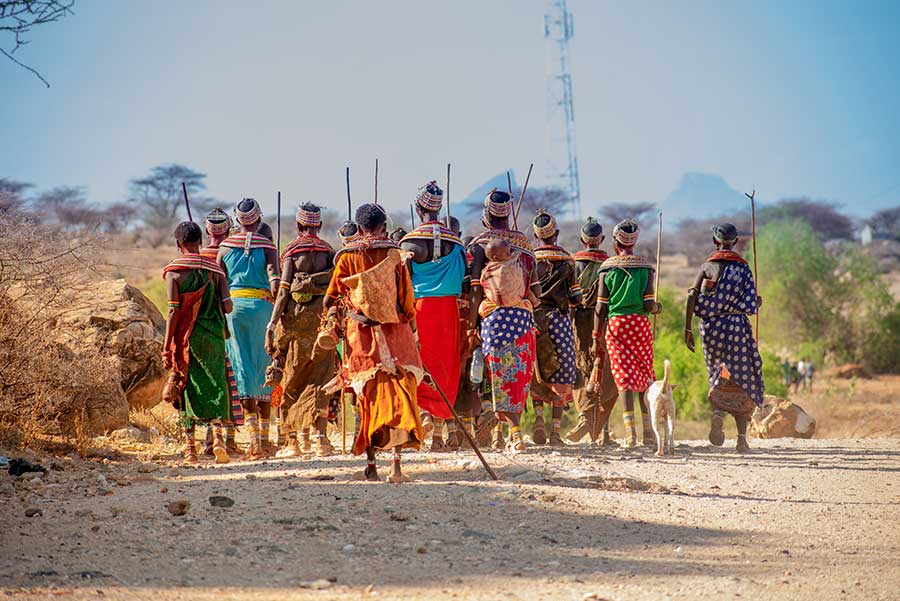
The Samburu have maintained their traditions with real continuity — cattle, goats, sheep and camels remain central to daily life and cultural identity, much as they have for generations. Ceremonies and celebrations follow customs passed down through the community, and traditional dance, performed in vivid red garments, is one of the more striking cultural experiences available to visitors. Samburu hospitality has a strong reputation among travellers — guests are typically welcomed warmly and treated with genuine respect.
Shaba National Reserve
East of Samburu and Buffalo Springs National Reserve, in neighbouring Isiolo County, Shaba is known for one of the region's most prominent lion populations, alongside rarer species like the reticulated giraffe, Somali ostrich and endangered Grevy's zebra — three of the animals collectively known as Kenya's "Samburu Special Five," found in this arid ecosystem and rarely seen in Kenya's more famous southern parks.
Kalama Community Conservancy
Bordering Samburu National Reserve, Kalama combines dramatic scenery — mountains, boulder-strewn terrain and acacia woodland — with a genuine conservation mission; registered as a trust in the early 2010s, it protects elephants, reticulated giraffes, Beisa oryx, lions, Grevy's zebras, wild dogs, gerenuk, kudu, leopards and cheetah across community-owned land.
Reteti Elephant Sanctuary
Located within the Namunyak Wildlife Conservancy, Reteti is Africa's first community-owned and -run elephant sanctuary — rescuing, hand-rearing and eventually rewilding orphaned and abandoned elephant calves, staffed largely by members of the local community. It's a genuinely different model from most elephant sanctuaries on the continent, and one of the more meaningful wildlife experiences in northern Kenya.
Elephant Watch Camp
Founded by conservationist Oria Douglas-Hamilton, Elephant Watch Camp sits inside Samburu National Reserve and combines classic safari game drives with a research-driven focus on the area's elephant populations — a well-regarded, if higher-end, base for exploring the region with family or friends.
Where to stay
Samburu has a solid range of lodges, camps and restaurants geared toward safari travellers, from family-friendly stays to more private, honeymoon-suited options. Given the region's remoteness, most visitors book accommodation as part of a broader northern Kenya safari itinerary rather than a standalone stay.
Ready to plan a trip? Take a look at
Quintrip's Kenya holiday packages to build Samburu into your safari itinerary.
A few practical questions
How do I get to Samburu? Most visitors fly into a local airstrip from Nairobi, or drive north as part of a longer safari route.
What's the best time to visit? June to October and January to February offer the best wildlife viewing, in line with Kenya's drier seasons.
Is Samburu suitable for families? Yes — several camps cater specifically to families, and the wildlife (especially at Reteti) is a strong draw for kids.

Related Posts


