
Get inspired...
Réunion Island's three volcanoes: a hiker's guide
Updated: 2 September 2025 - Author: Nolene Vilonel
Réunion's volcanic geology is the reason its interior looks the way it does — three distinct volcanic features, ranging from an extinct, eroded peak to one of the most active volcanoes on the planet, all within an island roughly 700km east of Madagascar. For hikers and anyone interested in genuinely dramatic landscape, these three are worth building a trip around.

Commerson Crater
Sitting in the highlands above Saint-Joseph, on the island's south side, Commerson Crater is part of the wider Piton de la Fournaise volcanic system but sits outside the Enclos Fouqué, the most recent and active caldera. Named after Philibert Commerson, the French naturalist who explored the region, the crater is reached via Route Forestière n°5, known locally as Volcano Road. The reflected glare off the volcanic rock here is intense — sunscreen and a hat are genuinely necessary even on an otherwise mild day, and weather can close in quickly in this part of the highlands, so it's worth building flexibility into your schedule rather than a tight timeline.
Piton de la Fournaise
Piton de la Fournaise is one of the most active volcanoes on Earth, with well over 150 recorded eruptions historically, including activity as recently as 2019 — though "active" here doesn't mean dangerous for visitors in the way it might sound. Lava typically flows toward the sea, away from settled areas, and eruptions are often treated as a genuine spectacle rather than an emergency, drawing crowds to safe viewing areas when conditions allow. The volcano sits inside Réunion National Park, part of the island's UNESCO World Heritage-listed interior, and locals refer to it simply as "le Volcan." Even without an active eruption to watch, the hike across its surrounding lava fields is worthwhile on its own — a genuinely lunar landscape unlike anywhere else on the island.
Piton des Neiges
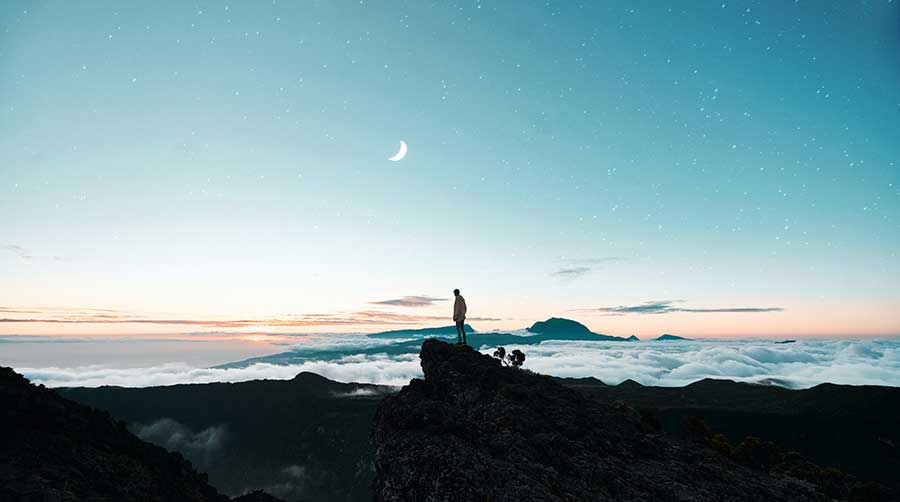
Réunion's highest point, Piton des Neiges rises to 3,069m and is generally considered the highest point of any island in the Indian Ocean. Unlike Piton de la Fournaise, it's long extinct — formed roughly two million years ago by the same volcanic hotspot, with no activity for around 20,000 years, and now heavily eroded. The island's three cirques (Salazie, Cilaos and Mafate) formed around its base, and the mountain remains a serious hiking objective: a demanding climb rewarded with a genuinely cold summit, occasional frost or light snow (the source of the name, "peak of snows," even if it's not a reliable annual event on a tropical island), and views across the whole island on a clear day. The surrounding nature reserve protects some of Réunion's high level of endemic flowering plant species, found nowhere else in the world.
Crawling through lava tubes
One activity genuinely unique to Réunion's volcanic terrain: guided tours through lava tubes, cave-like tunnels carved out by flowing lava over thousands of years in the dormant areas around the island's volcanoes. It's a tight, hands-and-knees kind of experience in places, and a guide is essential for navigating the tunnel networks safely — but it's a genuinely different way to engage with the island's geology than a surface hike.
Seeing the volcanoes from above
If hiking three volcanic sites isn't realistic in your timeframe, helicopter tours over Piton de la Fournaise cover much of the same ground from the air — lava fields, forest, and waterfalls all visible in a single flight, a good option if time or fitness is limited.
For accommodation, food and the island's wider hiking network, see our guide to Réunion Island with the family — worth reading alongside this one if the volcanoes are just one part of your trip. Take a look at Quintrip's Réunion Island holiday packages to start planning.
A few practical questions
Do I need a guide to visit the volcanoes? Not mandatory for surface hikes on marked trails, but strongly recommended for lava tube exploration and advisable given how quickly weather can change in the highlands.
Is it safe to visit during an eruption? Access to active eruption sites is controlled by local authorities and closed when conditions are unsafe — check current status before planning a trip around seeing one.
What should I pack for the volcano hikes? Sun protection despite the altitude, warm layers for Piton des Neiges' summit, and sturdy footwear for uneven volcanic terrain.

Related Posts